Zaidi Habib
Zaidi Habib
Category : Medicine - Pharmacy - Veterinary science - Sport
ZAIDI Habib
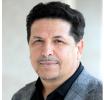 |
Medical Physicist and Full Professor Geneva University Hospital and University of Geneva, Switzerland |
Origins & Education
Habib Zaidi was born in 1967 in El Eulma, located in the wilaya of Sétif in Algeria, to parents who were teachers. His academic journey began with obtaining his baccalaureate in mathematics in 1985, followed by university studies at the University of Sétif where he earned a state engineering degree in electrical engineering in 1990. He continued his education with a magister in nuclear physics in Algiers in 1993.
Between 1993 and 1995, he worked in the department of medical physics in Algeria before moving to Switzerland where he became a teacher-researcher at the Faculty of Medicine in Geneva. In 2000, he obtained a PhD in Medical Physics from the University of Geneva, where he currently holds the position of chief physicist of the PET Instrumentation and Neuroimaging Laboratory.
His extensive training in physics, coupled with a specialization in medical imaging, has allowed him to develop unique expertise at the intersection of several disciplines, including physics, medical informatics, nuclear medicine, and artificial intelligence. This multidisciplinary background forms the foundation of his remarkable contributions to the field of medical imaging.
Scientific Career
Professor Habib Zaidi currently holds the position of chief physicist and founding head of the PET Instrumentation and Neuroimaging Laboratory within the Division of Nuclear Medicine and Molecular Imaging at Geneva University Hospital (HUG). Concurrently, he is a full professor at the Department of Radiology and Medical Informatics at the Faculty of Medicine of the University of Geneva (UNIGE).
His academic career extends beyond the Swiss borders, as he is also an honorary professor at the University of Groningen in the Netherlands, an adjunct professor at the University of Southern Denmark, and a visiting professor at Óbuda University in Hungary. He is also an adjunct professor at Shahid Beheshti University and a visiting professor at Tehran University of Medical Sciences in Iran.
His research, supported by the Swiss National Foundation, private foundations, and industry (totaling over 11 million US dollars), focuses on several major areas including the development of advanced multimodal imaging techniques, the application of artificial intelligence in medical imaging, and the improvement of diagnostic methods in nuclear medicine.
In addition to his research activities, Professor Zaidi is actively involved in developing imaging solutions for cutting-edge interdisciplinary biomedical research and clinical diagnosis. He also teaches undergraduate and graduate courses in medical physics and medical imaging, thereby contributing to the training of the next generation of specialists in this field.
His scientific output is exceptional, with more than 1,000 publications to his credit, including 450 articles in prestigious peer-reviewed journals (with an h-index of 81 and more than 24,200 citations according to Google Scholar), 530 conference proceedings, and 44 book chapters. He is the principal author or senior author in the majority of these publications. He has also edited four textbooks on therapeutic applications of Monte Carlo calculations in nuclear medicine, quantitative analysis in nuclear medicine imaging, molecular imaging of small animals, and computational anatomical animal models.
Distinctions & Recognition
Professor Habib Zaidi has received numerous prestigious distinctions that testify to the importance and impact of his contributions to medical physics and biomedical imaging:
- The 2023 John Mallard Award given by the IOMP for innovative developments of high scientific quality
- The 2021 Society of Nuclear Medicine and Molecular Imaging (SNMMI) Award
- The 2021 European Society of Radiology Award in Vienna, in the field of computational imaging and artificial intelligence
- The 2019 Khwarizmi International Award given by the Iranian Research Organization for Science and Technology (IROST)
- The 2017 IBA-Europhysics Prize given by the European Physical Society (EPS)
- The 2015 Sir Godfrey Hounsfield Award given by the British Institute of Radiology (BIR)
- The 2013 Vikram Sarabhai Oration Award given by the Society of Nuclear Medicine, India (SNMI)
- The 2013 John S. Laughlin Young Scientist Award given by the AAPM
- The prestigious 2010 Kuwait Prize of Applied sciences (known as the Middle Eastern Nobel Prize)
- The 2007 Young Scientist Prize in Biological Physics given by the International Union of Pure and Applied Physics (IUPAP)
- The 2004 Mark Tetalman Memorial Award given by the Society of Nuclear Medicine
- The prestigious 2003 Bruce Hasegawa Young Investigator Medical Imaging Science Award
- Elevation to the grade of IEEE fellow by the Board of Directors of the Institute of Electrical and Electronics Engineers
- Elevation to the grade of Fellow of the AIMBE (American Institute for Medical and Biological Engineering)
- Elevation to the grade of Fellow of the AAPM (American Association of Physicists in Medicine)
- Elevation to the grade of Fellow of the IOMP, AAIA, and BIR
These recognitions by his peers testify to his exceptional contributions to these fields and the impact of his work on the international scientific community.
Impact & Influence
The impact and influence of Professor Habib Zaidi on the field of medical physics and biomedical imaging are considerable and multidimensional.
On the scientific level, his pioneering work on the development of multimodal medical imaging techniques using artificial intelligence has opened new perspectives for medical diagnosis and biomedical research. His contributions to the modeling of imaging systems, image reconstruction, and quantitative analysis have significantly improved the accuracy and reliability of these technologies.
His influence also extends to the editorial field and the dissemination of scientific knowledge. He has been a guest editor for 14 special issues of peer-reviewed journals dedicated to various aspects of medical imaging and serves as founding Editor-in-Chief (scientific) of the British Journal of Radiology (BJR)|Open, Deputy Editor for Medical Physics, and Associate Editor or member of the editorial board of several prestigious scientific journals in his field.
His influence extends internationally, as he was elected liaison representative of the International Organization for Medical Physics (IOMP) to the World Health Organization (WHO) and Chair of Subcommittee on Part 1 Examination of the International Medical Physics Certification Board (IMPCB) and the Imaging Physics Committee of the American Association of Physicists in Medicine (AAPM). He is also affiliated with several international medical physics and nuclear medicine organizations.
As a developer of physics web-based instructional modules for the RSNA and Editor of IPEM's Nuclear Medicine web-based instructional modules, he actively contributes to the continuing education of healthcare professionals in these fields.
His international reach is also manifested by his numerous interventions as an invited speaker. He has given more than 250 plenary lectures and presentations at international events, thus sharing his expertise and inspiring the global scientific community.
Finally, he participates in the evaluation of research proposals for European and international funding organizations and is involved in the organization of international symposia and conferences, thereby helping to shape future research directions in his field.
To Learn More
To deepen your knowledge about Professor Habib Zaidi's work and his contributions to medical physics and biomedical imaging, you can consult:
- His professional profile on the Geneva University Hospitals (HUG) website
- His academic page at the University of Geneva
- His scientific publications on Google Scholar or ResearchGate
- The websites of the learned societies of which he is a member, such as IEEE, AAPM, or SNMMI
- The books he has edited on applications of Monte Carlo calculations in nuclear medicine, quantitative analysis in medical imaging, and molecular imaging
- Article on his global recognition in molecular medicine