Mouri Hassina
Mouri Hassina
Category : Biology - Biochemistry - Agronomy - Geology
MOURI Hassina
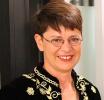 |
Professor and UNESCO Chair in Medical Geology University of Johannesburg, South Africa |
Origins & Education
Hassina Mouri is originally from Algeria, where she began her exceptional academic journey that has taken her across three continents (Africa, Europe, and America). Her international education has allowed her to acquire a unique expertise in her field.
In 1990, she obtained with distinction her degree in Geology Engineering at the University of Science and Technology Houari Boumediene (USTHB) in Algiers, Algeria. This first degree laid the solid foundation for her scientific career.
Continuing her academic excellence, she pursued doctoral studies in France. Between 1992 and 1995, she completed her PhD in Petrology at the University of Paris 7 and the National Museum of Natural History in Paris, which she also obtained with distinction. Her thesis focused on metamorphic geology, a field that would become one of her main areas of expertise.
Her training continued internationally with a position as a Research Associate in Geology at the University of Helsinki and the Geological Survey of Finland from 1995 to 1999, followed by a post-doctoral fellowship at the University of Minnesota in the United States (1999-2000). These international experiences allowed her to deepen her knowledge of high-grade metamorphic rocks and expand her global professional network.
Scientific Career
Hassina Mouri's scientific career is marked by her commitment to the development of research in Africa and her ability to create bridges between different scientific disciplines.
Driven by a strong desire to contribute to research and development in Africa, she returned to the continent in 2000 to take up a senior lecturer position in Metamorphic Geology at the University of Pretoria in South Africa. In 2008, she joined the University of Johannesburg, becoming the first female PhD academic in Geology in the departments of both these prestigious South African universities.
As a metamorphic petrologist, her main fields of expertise include the Archaean High to Ultra-High Temperature (UHT) granulites and radiogenic isotope geology (U-Pb and Sm-Nd). Throughout her career, she has worked in various geological environments, including Archaean granulites from the Hoggar Shield in Algeria, Svecofennian Paleoproterozoic migmatites in Finland, British Columbia granulites and migmatites in Canada, EGB granulites in India, as well as the Limpopo and Namaqualand metamorphic belts in South Africa.
In 2013, demonstrating a forward-thinking approach, she began developing the discipline of Medical Geology in Africa. This innovative approach aims at training a younger generation of African students to understand the intricate relationships between geo-environment and health, thus enhancing community well-being and aligning with the UN Sustainable Development Goals. Under her leadership, the University of Johannesburg quickly became Africa's foremost destination for postgraduate training in this field, hosting students from across the continent and collaborating with several international experts.
Her work supervising master's and doctoral students from various African countries, including Namibia, Ghana, Nigeria, Kenya, and South Africa, demonstrates her commitment to developing scientific capacity across the continent.
In addition to her research, Professor Mouri has been invited to co-organize and chair scientific sessions, as well as present her work at numerous international conferences. Her most recent contribution was her invitation to the World Science Forum in Cape Town, in December 2022.
Distinctions & Recognition
Hassina Mouri's leadership and contributions to the field of geoscience have earned her numerous prestigious distinctions and appointments, testifying to the impact and quality of her work.
Among her most significant awards are:
- The African-European Union Regional Women in Science Award, recognizing her exceptional contribution to scientific development in the region
- The University of Johannesburg's Dux Award for Executive Leadership, highlighting her leadership qualities within the institution
- The prestigious B-rating from the National Research Foundation (South Africa), attesting to the excellence of her research work
- The UNESCO Chair in Medical Geology in Africa, an international recognition of her leadership in this emerging field
- The international Hypatia Award, celebrating her remarkable contributions to science
Her peers have also recognized her expertise by entrusting her with leadership positions in several international scientific organizations:
- Secretary General of the Geological Society of Africa (2008-2012), the first African woman to hold this position
- Chair of the Organizing Committee of the 23rd Colloquium of African Geology, organized for the first time in South Africa at the University of Johannesburg in January 2011
- Councillor for the International Union of Geological Sciences (IUGS, 2012-2016)
- Vice President of the IUGS (2020-2024), and recently appointed President of this same organization for the period 2024-2028
- Councillor for the International Medical Geology Association (IMGA, 2013-2015)
- Chair of the South African IUGS/IGCP Committee
- IGCP Council member
- Member of the advisory committee of the International Geological Congress (IGC) Korea, 2024
These multiple recognitions testify to Hassina Mouri's considerable influence in the field of geosciences, both at the African and international levels.
Impact & Influence
Hassina Mouri's impact on geosciences and particularly on the development of research in Africa is considerable and multidimensional.
As a pioneer, she has paved the way for women scientists in Africa, becoming the first female PhD academic in Geology in the departments of two of South Africa's most prestigious universities. Her exemplary journey constitutes a source of inspiration for young African women wishing to pursue a career in Earth sciences, a field traditionally dominated by men.
Her innovative work in developing Medical Geology in Africa represents a major contribution at the intersection of geosciences and public health. By establishing the University of Johannesburg as a center of excellence for this discipline, she has created a hub for training and research that benefits the entire African continent. Her relentless efforts to bridge the gap between geoscience and public health have gained international recognition, as evidenced by her invitations as a keynote speaker at several prestigious conferences.
Through her mentoring of students from various African nationalities, she actively contributes to strengthening scientific capacities across the continent. The young researchers she trains in turn become agents of change in their respective countries, disseminating the knowledge and skills acquired under her guidance.
Her leadership within international scientific organizations such as the International Union of Geological Sciences allows her to influence the directions of geological research on a global scale, while ensuring that Africa's specific concerns and needs are taken into account in international research agendas.
By establishing links between geology and the United Nations Sustainable Development Goals, she demonstrates the relevance of Earth sciences for addressing contemporary societal challenges. This approach helps to enhance the value of geosciences among policy makers and the general public, thus facilitating support for research in this field.
Her recent appointment (2024) as President of the International Union of Geological Sciences (IUGS) for the period 2024-2028 testifies to the global recognition of her leadership and offers her an even more influential platform to shape the future of geosciences on an international scale.
Learn More
To deepen your knowledge about Hassina Mouri and her work, you can consult: