Mohammadi Abdelkader
Mohammadi Abdelkader
Category : Medicine - Pharmacy - Veterinary science - Sport
MAHAMMEDI Abdelkader
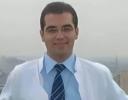 |
Associate Professor of Neuroradiology Stanford University School of Medicine, United States |
Origins & Education
Dr. Abdelkader Mahammedi is originally from Algeria, where he began his medical journey at the University of Algiers. After obtaining his medical degree, he continued his training in the United States, determined to specialize in the field of radiology and medical imaging.
His American academic journey began with a postdoctoral research fellowship in Diagnostic Radiology at Johns Hopkins Hospital, where he had the opportunity to work under the mentorship of Dr. Stanley Siegelman, a prominent figure in the field of radiology.
Eager to deepen his knowledge and acquire versatile expertise, Dr. Mahammedi completed residencies in both Nuclear Medicine and Diagnostic Radiology. He then pursued his specialization in neuroradiology through a fellowship at the Cleveland Clinic Imaging Institute, thus consolidating his expertise in central nervous system imaging.
This rigorous and diverse training allowed him to develop particular expertise in several areas of neuroradiology, including brain tumors, stroke, small vessel disease, head and neck imaging, and functional magnetic resonance imaging (fMRI).
Scientific Career
Dr. Mahammedi's career is marked by a deep commitment to clinical research and teaching, alongside his medical practice. Before joining Stanford University, he served as an assistant professor of neuroimaging at the University of Cincinnati Hospital and the UC-Gardner Institute for Neuroscience, where he made significant contributions to the advancement of knowledge in neuroradiology.
Currently, he holds the position of Associate Professor of Neuroradiology in the Department of Radiology at Stanford University School of Medicine, an institution globally recognized for the excellence of its medical research.
His scientific contribution is particularly remarkable in the context of the COVID-19 pandemic. At the beginning of this global health crisis, Dr. Mahammedi led and collaborated with several institutions in Italy, Spain, and Brazil. His work was considered the first and largest study in the scientific literature to systematically characterize neurological symptoms and neuroimaging features in patients hospitalized for COVID-19. This pioneering research was published in the prestigious journal Radiology.
More recently, he has published multicenter and global COVID-19-related articles, which have been featured in international media in more than 25 languages, across 200 newspapers, CNN, BBC, NPR, local televised broadcasts, and the 2020 RSNA Press Release, testifying to the global impact of his research.
Beyond his work on COVID-19, Dr. Mahammedi has made significant contributions in other areas of neuroradiology. In 2014, he was recognized for introducing a new technique for the early detection of pulmonary hypertension on CT scans, an innovation that was cited among the top-cited articles in the Journal of Thoracic Imaging.
His scientific output is impressive, with over 30 peer-reviewed publications, including lead authoring several articles in high-impact journals. He is also a co-author of multiple books, including "Imaging Appearance of Migraine and Tension Type Headache" and "Humanizing Brain Tumors: Strategies for You and Your Physician," published in 2022, the latter dealing with the diagnostic aspect of MRI for brain tumors.
In addition to his research on advanced imaging techniques, Dr. Mahammedi also made a significant discovery published in the American Journal of Neuroimaging Medicine in March 2021, concerning the possibility of predicting a brain lesion in a patient from their prior examination with a thoracic CT scan, an advance that has been widely recognized in the medical community.
Distinctions & Recognition
Dr. Abdelkader Mahammedi has received numerous distinctions that testify to the excellence of his work and his significant contribution to neuroradiology.
In 2022, he was named "Best Doctor of the Year" in Ohio by the American TopDocs Foundation specializing in medicine, a recognition that highlights his exceptional achievements during 2021 in several areas, including clinical services, research work, teaching, as well as his publications.
His nomination in March 2021 as a semi-finalist for the prestigious Cornelius Dyke Award of the American Society of Neuroradiology (ASNR) constitutes an important recognition of his innovative work in the field of neuroradiology, particularly for his discovery concerning the prediction of brain lesions from thoracic examinations.
He also received the Best Case Award at the American Institute of Radiologic Pathology (AIRP) in Neuroradiology, testifying to his clinical expertise and his ability to identify and document complex and instructive cases.
In 2021, Dr. Mahammedi was crowned with the title of "TopTeacher" of the year, recognizing his commitment and excellence in training the next generation of radiologists and neuroradiologists.
These multiple distinctions, covering research, clinical practice, and teaching, testify to Dr. Mahammedi's holistic approach in his medical career and his significant impact in various aspects of neuroradiology.
Impact & Influence
Dr. Abdelkader Mahammedi's impact in the field of neuroradiology extends well beyond his direct scientific contributions. As a clinician, researcher, and educator, he has influenced multiple facets of his specialty.
Clinically, his expertise in imaging brain tumors, strokes, and small vessel diseases has helped improve the diagnosis and management of many patients. His participation in the therapeutic team of the medical-surgical service for brain and neurological diseases has allowed the integration of advanced diagnostic approaches into daily medical practice.
His research work, particularly that related to the neurological manifestations of COVID-19, has had a global impact on understanding and managing this new disease. As a leader in this field, he has helped establish imaging protocols and diagnostic criteria that have guided clinical practice during the pandemic.
His discovery regarding the prediction of brain lesions from thoracic scans represents a significant advance in the integrated diagnostic approach, highlighting the importance of a holistic view of the patient in radiology.
As a recognized educator, Dr. Mahammedi has trained many radiologists and neuroradiologists who, in turn, apply and disseminate the knowledge and skills he has imparted to them. His impact thus extends through generations of healthcare professionals that he continues to inspire and train.
His co-authorship of the book "Humanizing Brain Tumors: Strategies for You and Your Physician" also testifies to his commitment to making medical knowledge more accessible, not only for healthcare professionals but also for patients and their families, thus contributing to a more humanized approach to medicine.
As a scientist of Algerian origin who has reached the heights of excellence in the American medical system, Dr. Mahammedi also represents a source of inspiration for young doctors and researchers worldwide, particularly those from developing countries. His journey illustrates how talent, determination, and commitment to excellence can transcend geographical and cultural boundaries.
Learn More
To deepen your knowledge about Dr. Abdelkader Mahammedi's work, you can consult:
- His profile on the Stanford University School of Medicine website
- Article on Maghreb Emergent about his distinction
- His scientific publications in specialized journals such as Radiology and the American Journal of Neuroimaging Medicine
- His book "Humanizing Brain Tumors: Strategies for You and Your Physician" (2022)
- "Imaging Appearance of Migraine and Tension Type Headache," a book co-written by Dr. Mahammedi