Guessoum Nidhal
Guessoum Nidhal
Category : Astronomy - Aeronautics - Space Science - Sea Science
GUESSOUM Nidhal
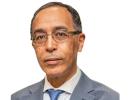 |
Professor of Astrophysics American University of Sharjah, United Arab Emirates |
Origins & Education
Nidhal Guessoum was born on September 6, 1960, in Algeria. Coming from a family that valued education, he showed an early interest in science and astronomy. He completed his secondary education at Lycée Amara Rachid in Algiers, where he distinguished himself through academic excellence.
His university career began at the University of Science and Technology of Algiers, where he earned a Bachelor of Science (B.Sc.) in theoretical physics in 1982. Determined to deepen his knowledge, he continued his studies in the United States at the University of California, San Diego (UCSD), an institution renowned for its excellence in astrophysics. There, he successively obtained a Master of Science (M.Sc.) and a Doctor of Philosophy (Ph.D.) in astrophysics.
His doctoral thesis, defended in 1988, focused on a complex and fundamental subject: thermonuclear reactions of light nuclei in astrophysical plasmas. This research explored the energy processes at the core of the Sun and the fragmentation reactions of light nuclei in various astrophysical environments such as accretion disks around black holes and neutron stars, thus contributing to deepening our understanding of stellar mechanisms and high-energy phenomena in the universe.
Scientific Career
After obtaining his doctorate, Nidhal Guessoum began a brilliant career as a researcher and educator. He first completed a post-doctoral fellowship at the prestigious NASA Goddard Space Flight Center under the supervision of Reuven Ramaty, a renowned astrophysicist specialized in gamma-ray studies. This collaboration profoundly influenced the direction of his future research.
His academic career then led him to several institutions around the world. Between 1990 and 1995, he returned to his native country to teach at the University of Blida in Algeria, contributing to the development of scientific education in the region. From 1995 to 2000, he joined the College of Technological Studies in Kuwait, broadening his experience in the Arab world.
Since 2000, he has been a professor at the American University of Sharjah in the United Arab Emirates, where he continues his research and teaching activities. He also collaborates with several prestigious scientific institutions in France and internationally, notably the INTEGRAL laboratory at the Center for Space Radiation Studies in Toulouse.
His areas of expertise cover several aspects of high-energy astrophysics, with particular emphasis on:
- Gamma-ray astrophysics
- Electron-positron annihilation in the galactic center
- The study of nuclear gamma lines
- Gamma-ray bursts
- Cosmology and Islamic astronomy
His scientific output is substantial and diverse, with more than a hundred publications in peer-reviewed international journals, book chapters, and presentations at international conferences. His work on electron-positron annihilation in the Milky Way has made significant contributions to our understanding of this complex phenomenon.
Distinctions & Recognition
Throughout his career, Nidhal Guessoum has received numerous distinctions for his exceptional contributions to physics, education, and the dialogue between science and religion. In June 2003, his excellence in research was recognized with the 2nd Prize for Research in Science, Engineering, and Architecture from the American University of Sharjah.
His international reputation is attested by his membership in several prestigious scientific institutions:
- Member of the International Astronomical Union (IAU)
- Member of the International Society for Science and Religion (ISSR)
- Collaborator on the Islamic Crescent Observation Project (ICOP)
- Research associate at the INTEGRAL laboratory (Center for Space Radiation Studies in Toulouse)
He has also been invited as a speaker to numerous universities and international institutions, testifying to the recognition of his expertise by his peers. His role as a science communicator has led him to be sought after by many international media outlets, including Al-Jazeera, BBC, NPR, France 2, and Le Monde, to enlighten the public on complex scientific issues.
Impact & Influence
Nidhal Guessoum's influence extends far beyond the scope of his scientific research. He has established himself as a leading intellectual in the Arab and Muslim world, working toward the development of a modern scientific culture and constructive dialogue between science and religion.
As a fervent advocate for scientific thinking in the Muslim world, he invests considerably in science communication and education. His balanced and rigorous approach to the relationship between science and Islam has made him a respected voice in both scientific and religious circles.
His major work, "Islam's Quantum Question: Reconciling Muslim Tradition and Modern Science" (2010), translated into several languages, constitutes an important reference in this field. In this book, he advocates for the integration of modern scientific advances into Islamic thought, while proposing a nuanced approach that respects both scientific rigor and religious tradition.
His work on the Islamic calendar, notably his co-authorship of a book on the observation of the lunar crescent, demonstrates his desire to apply scientific methodology to questions traditionally governed by religious approaches. He has thus contributed to modernizing and rationalizing certain practices while respecting their spiritual dimension.
His critical article published in Nature in 2013 had a significant impact, highlighting the striking contrast between the golden age of Islamic astronomy and the current lack of investment by Arab countries in astronomical research. This courageous stance illustrates his commitment to scientific renewal in the Arab world.
His media presence is also significant. As a regular contributor to influential newspapers and platforms such as Gulf News, The Huffington Post, and Nature Middle East, he uses these forums to raise awareness among a wide audience about scientific issues and the importance of dialogue between science and religion. His appearances on channels like Al-Jazeera, BBC, or France 2 allow him to reach an even broader and more diverse audience.
Through his teaching, writings, and lectures, Nidhal Guessoum inspires many young scientists, particularly in the Arab world, to pursue careers in scientific fields and to develop critical and open thinking. His influence thus extends well beyond his direct contributions to astrophysics, making him a true bridge between Western and Islamic scientific cultures.